Evaluating Legal Technology: Beyond the Feature List
A framework for assessing legal technology investments that accounts for integration complexity, change management, and long-term total cost of ownership.
A demo is a controlled environment built to hide exactly the things that will hurt you eighteen months into a live deployment.
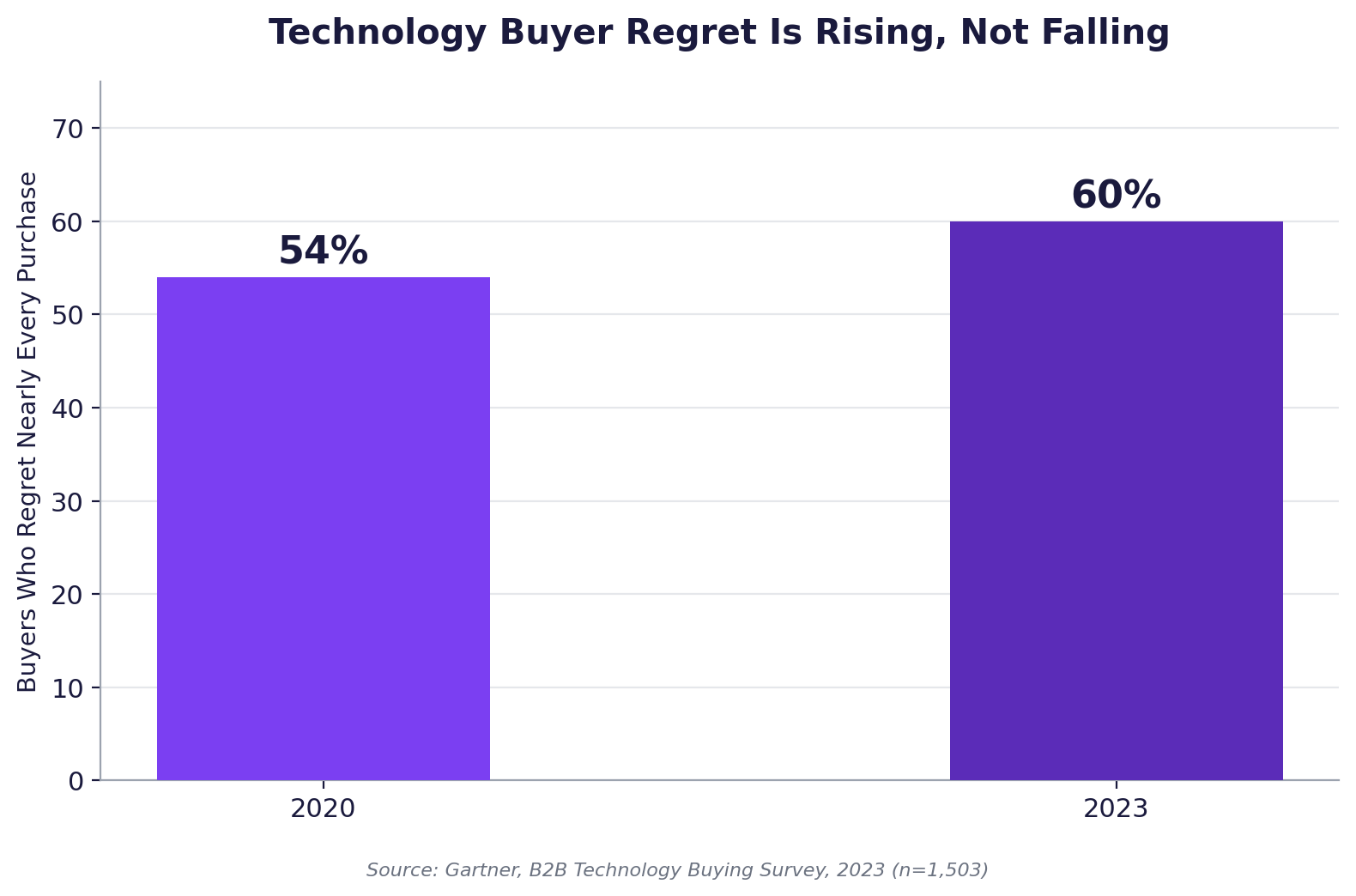
Legal technology buying has become a genuinely difficult discipline, and it is getting harder, not easier, even as the tools themselves improve. Gartner's most recent B2B technology buying survey found that 60 percent of buyers involved in renewal decisions regret nearly every purchase they make, up from 54 percent just three years earlier. That number is not about bad vendors. It is about a buying process, still common across legal departments, that evaluates the wrong things in the wrong order.
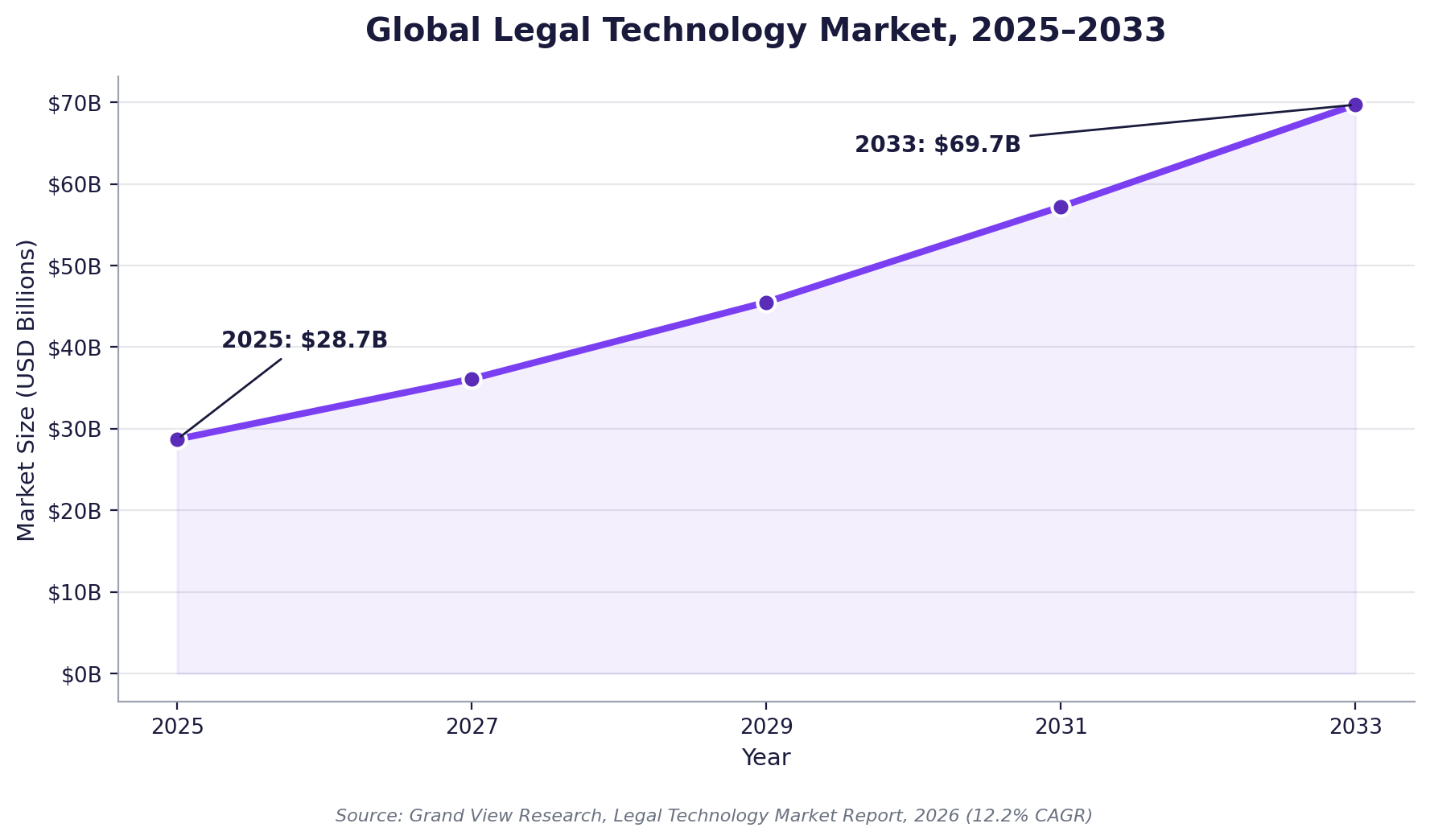
The legal technology market is large enough now that this mistake is expensive at scale. Global spend is projected to grow from roughly $28.7 billion in 2025 to $69.7 billion by 2033, and every legal department buying into that market is making a bet that the tool they select today will still be worth using three renewal cycles from now.
Why the Feature List Is the Wrong Starting Point
Every legal technology demo is, by design, a highlight reel. Vendors show the workflow that works, on data that has been cleaned in advance, in an environment with none of the integration friction, permission structures, or legacy data quality problems that exist inside a real legal department. This is not dishonest. It is simply what a sales demo is for. The problem is that most buying committees treat the demo as representative evidence rather than as marketing, and build their evaluation criteria entirely around what the demo showed them.
A feature list answers the question of what a tool can theoretically do. It says almost nothing about what actually determines whether that tool delivers value inside a specific legal department: how hard it is to integrate with the systems already in place, how much change management the rollout will require, what the true multi-year cost looks like once implementation, training, and support are included, and whether the vendor will still be a viable, well-governed partner three years into the contract.
Where Legal Technology Spend Actually Concentrates
Understanding where the market itself concentrates spend is a useful gut check before any individual buying decision. Legal research and data products still command the largest share of legal technology spend, at roughly 30 percent, largely because these are mature, sticky subscriptions that are hard to displace once embedded in daily workflow. Contract management and contract AI tools represent about 18 percent of spend today and are the fastest-growing category, while eDiscovery holds a stable 16 percent share driven by high-stakes litigation matters.
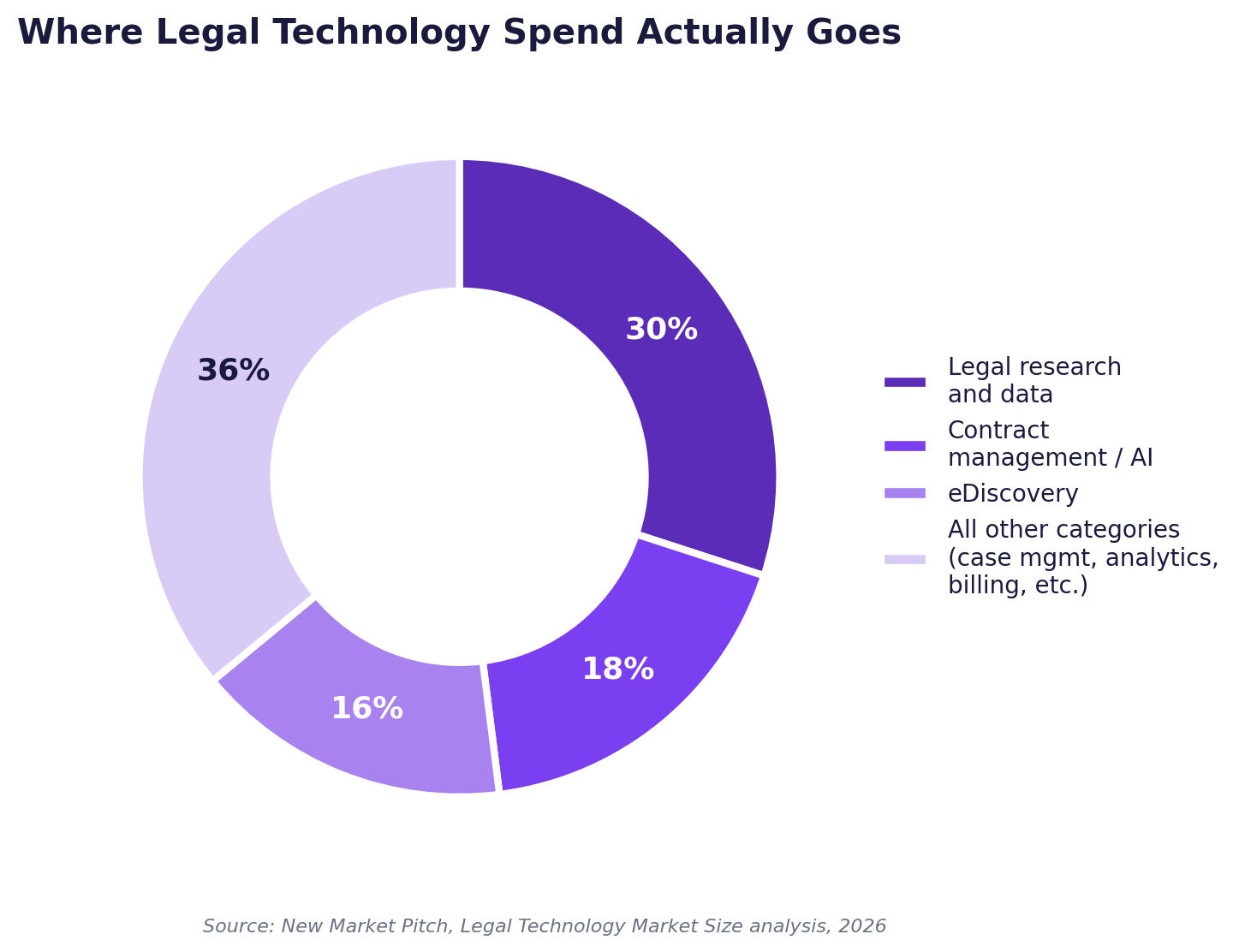
The pattern worth noticing is that the largest and stickiest categories are not necessarily the ones with the flashiest feature sets. They are the categories that became embedded in daily workflow and proved durable over multiple renewal cycles. That durability is exactly what a feature-list evaluation fails to test for, and exactly what a total value evaluation is built to surface.
The Roshwin Total Value Assessment
At Roshwin, we evaluate legal technology purchases across five dimensions, weighted deliberately differently from how most buying committees naturally weight them. The gap between the two weightings is the gap between a purchase decision that ages well and one that becomes a source of regret by the second renewal.
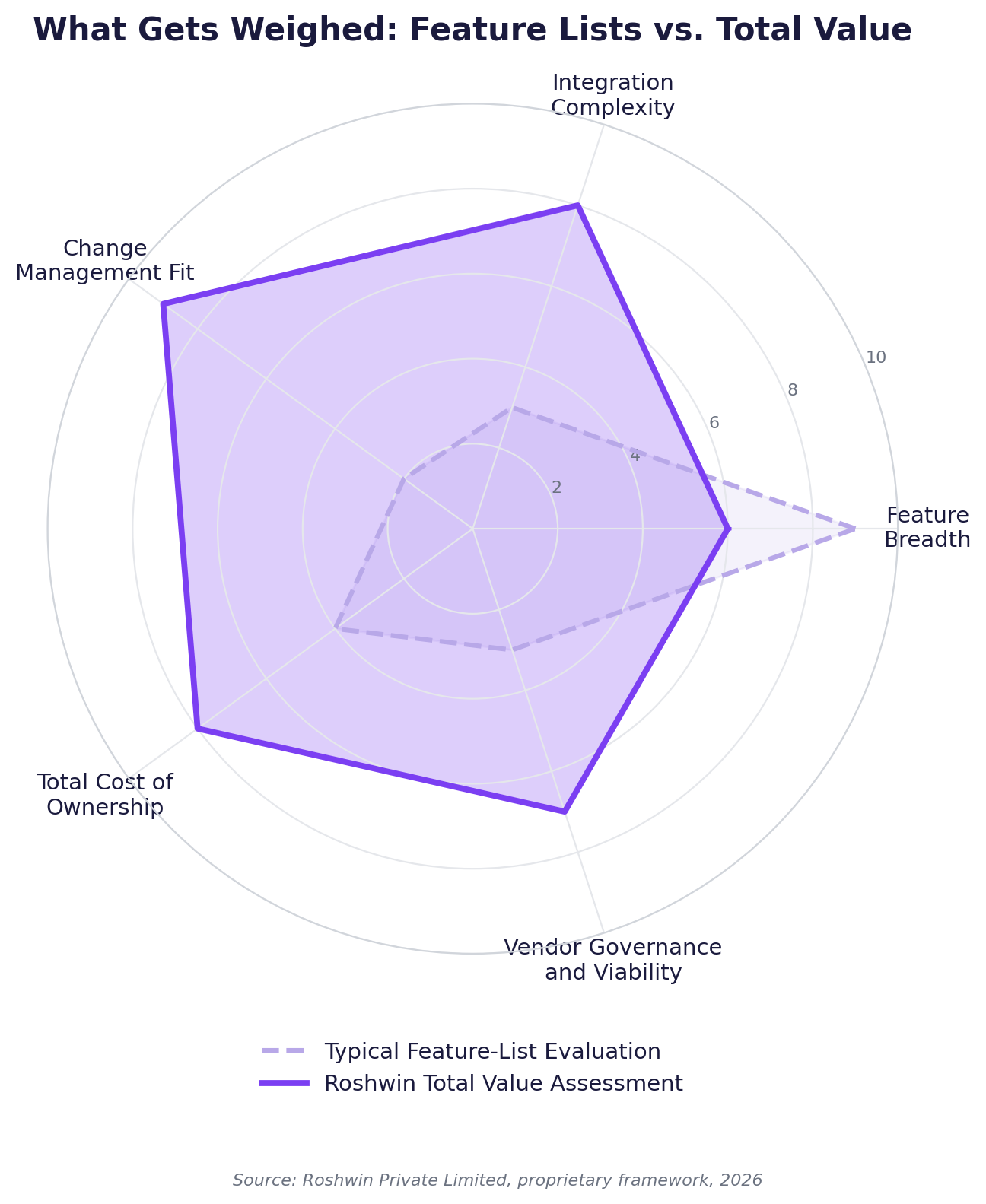
Feature Breadth: still matters, just less than it feels like it should. A tool needs to do the job in front of it. But feature breadth is the dimension every vendor is already optimizing for, which means it is the dimension least likely to differentiate a good long-term choice from a bad one at the point of sale.
Integration Complexity: the most underweighted dimension in most evaluations. How much custom engineering does this tool need to talk to the systems already in place? A tool that requires heavy custom integration work carries hidden cost and hidden failure risk that never appears in a demo.
Change Management Fit: whether the people who have to use it will actually use it. Does this tool fit how the team already works, or does it require the team to fundamentally change their workflow to accommodate the software? The second path requires a change management investment that rarely appears in the initial business case.
Total Cost of Ownership: the real multi-year number, not the license quote. The license fee is frequently a fraction of the true cost once implementation services, ongoing training, data migration, and support tiers are included. A tool that looks cheaper on the license line can be materially more expensive over a three-year term.
Vendor Governance and Viability: whether the vendor will still be a credible partner in three years. Is this vendor financially stable, appropriately governed for the sensitivity of the data involved, and likely to still be investing in the product three renewal cycles from now, rather than being acquired, deprioritized, or discontinued.
A Practical Evaluation Checklist
Beyond the five dimensions above, we walk buying committees through a short set of questions designed to surface what a demo will not show. Each question is aimed at a specific failure mode we have seen recur across legal technology purchases.
| Evaluation Question | What It Actually Tests |
|---|---|
| Can the vendor show a reference customer with a data environment as messy as yours, not their cleanest case study? | Whether the tool works outside ideal conditions |
| What does a fully loaded, three-year cost look like, including implementation, training, and support tiers? | True total cost of ownership, not the headline license price |
| Who specifically, by name or role, owns adoption after go-live? | Whether change management has an accountable owner |
| What happens to your data and workflow if the vendor is acquired or the product is sunset? | Vendor governance and long-term viability risk |
| Which existing systems does this tool need to integrate with, and has that integration been tested, not just described? | Real integration complexity versus marketed compatibility |
What This Means for Legal Technology Buyers
- Score every serious vendor against all five Total Value Assessment dimensions before the demo, not after. A demo tends to anchor the evaluation on feature breadth alone if it happens first.
- Insist on a reference conversation with a customer whose environment resembles yours, including its messiness, not the vendor's strongest case study.
- Build the three-year total cost of ownership into the business case from day one, not as a follow-up question after the contract is already being negotiated.
- Name an adoption owner before signing, not after go-live. A tool without an accountable adoption owner is already at risk of joining the 60 percent regret statistic.
Conclusion
The legal departments that consistently make technology decisions they do not regret are not the ones with the most rigorous feature comparison spreadsheets. They are the ones that learned to treat the demo as marketing rather than evidence, and built an evaluation process around the dimensions that actually predict whether a tool will still be delivering value at the third renewal. Roshwin's technology advisory practice is built around exactly that discipline: helping legal departments see past the feature list to the total value question underneath it.
Put this into practice
Related ROSHWIN services
Legal operations, managed legal services and AI-enabled transformation, led by attorneys
ROSHWIN Private Limited works as an extension of corporate legal departments and law firms. Our attorney-led teams combine subject knowledge with responsible use of AI, so the work is fast, consistent and defensible, with pricing agreed up front.
Serving clients across the globe, including the United States, Canada, the United Kingdom and Europe, and the Middle East.
Continue reading
All insights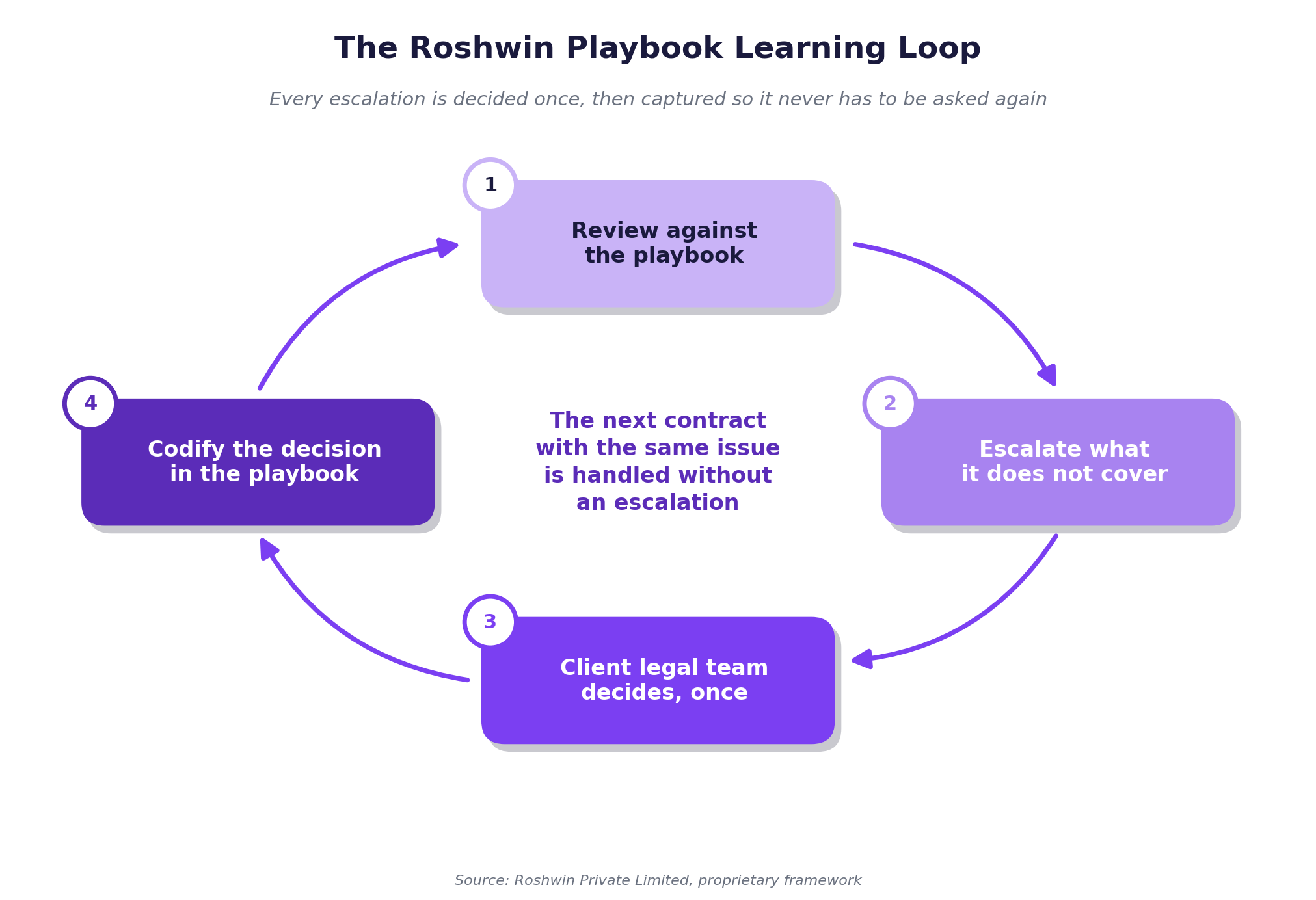
Playbooks That Learn: Contract Review With Falling Escalation Rates
How a contract review playbook turns every escalation into a decision made once, and why the best programs track how often they have to ask.
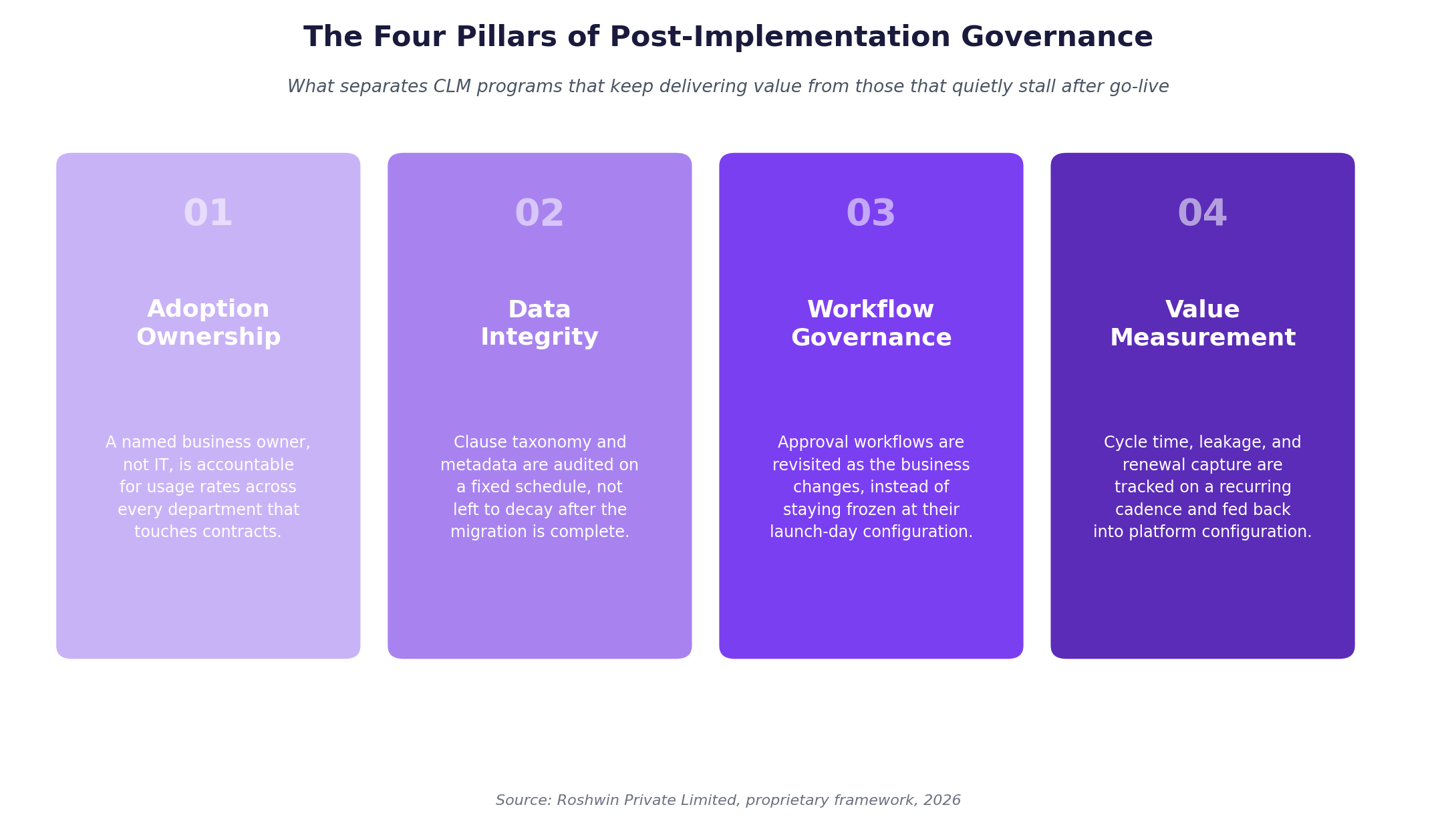
Beyond Implementation: Making CLM Deliver Ongoing Value
Why contract lifecycle management success depends on operational commitment, not just technology selection. Lessons from organizations that moved beyond the initial deployment.