
Contract Intelligence: From Data to Strategic Insight
Transforming the contract repository from a static archive into a dynamic source of commercial intelligence and risk visibility.
A contract repository that nobody queries is not an asset. It is a very expensive filing cabinet with a search bar.
Most legal departments already have the raw material for genuine strategic insight sitting inside their contract repository. Every negotiated term, every pricing concession, every renewal cycle, every clause a counterparty pushed back on, is data. The overwhelming majority of legal departments never turn it into anything. It sits there, technically stored, functionally invisible, until someone needs a specific contract for a specific reason and goes looking for it.
That gap between having contract data and having contract intelligence is one of the more fixable problems in legal operations, and it is also one of the most consistently ignored, because fixing it does not feel urgent the way a compliance deadline or an active dispute does.
The Visibility Problem Comes First
Before any organization can extract strategic insight from its contracts, it has to be able to find them. This sounds too basic to be a real problem. It is, in fact, exactly where most organizations are still stuck.
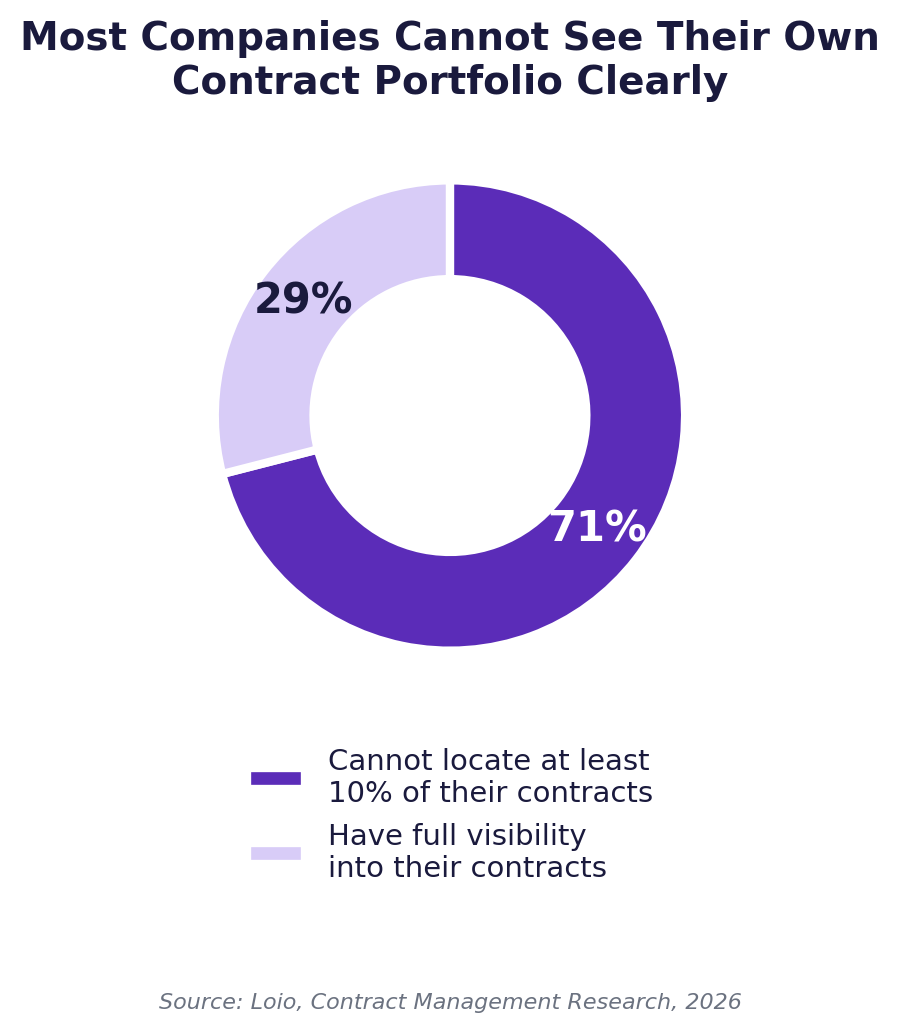
A significant majority of businesses cannot locate at least one in ten of their own contracts on demand. That is not an analytics problem. It is a foundational visibility problem, and no amount of dashboard sophistication will fix it if the underlying repository is incomplete or unsearchable. Strategic contract intelligence is a ladder, and visibility is the bottom rung. Organizations that try to skip straight to advanced analytics without first solving basic visibility end up with impressive-looking dashboards built on an incomplete and unreliable data foundation.
What Mature Contract Data Practices Actually Deliver
The organizations that do make the climb from repository to insight see returns that are concrete and specific, not abstract claims about better decision-making. Legal operations leaders reporting mature data practices point to two recurring wins.
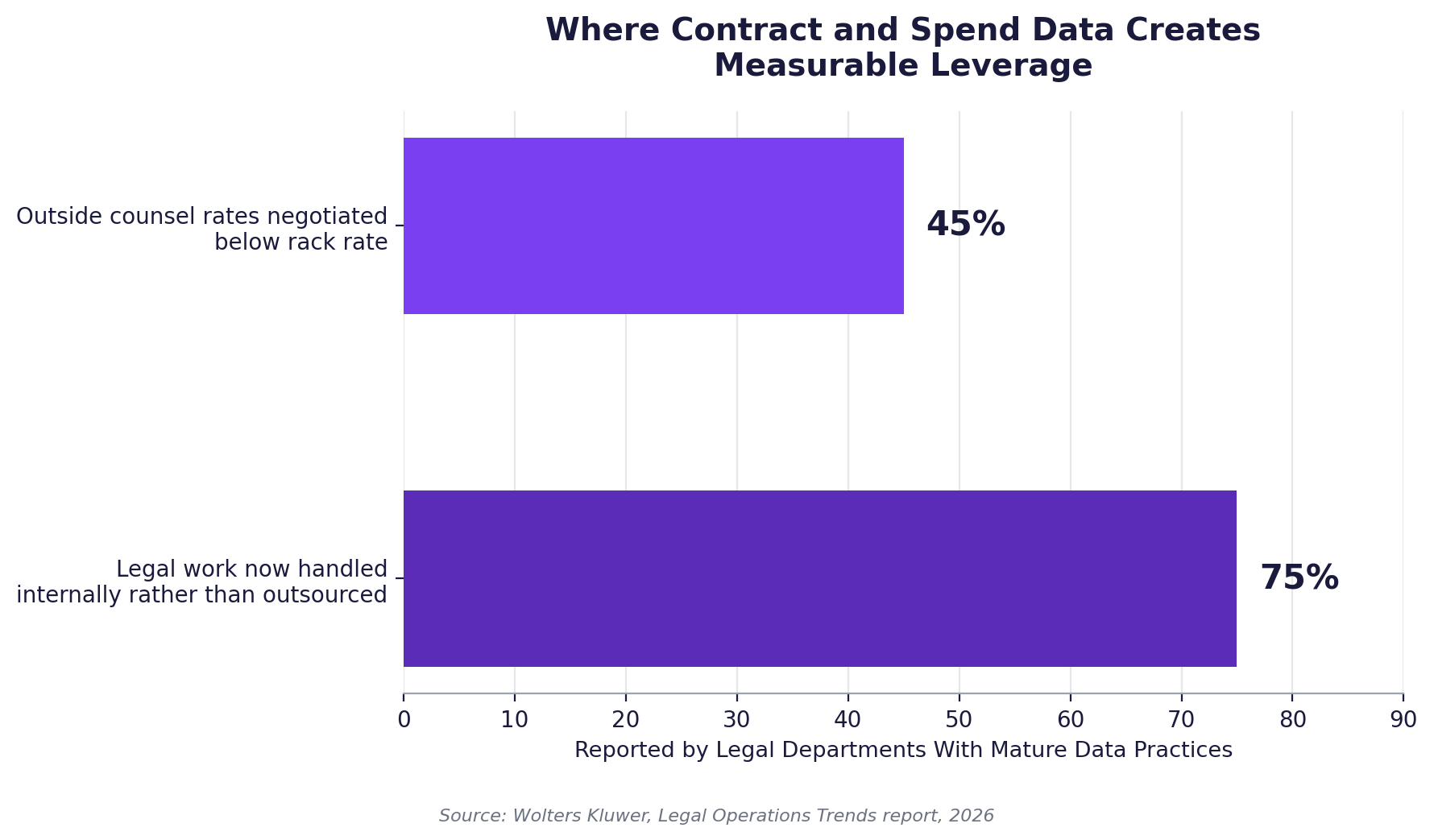
Departments with disciplined billing guidelines and clear, data-backed expectations have negotiated outside counsel rates as much as 45 percent below standard rack rates. Separately, departments with strong internal data and technology foundations report bringing as much as 75 percent of their legal work in-house, a shift enabled by the confidence that better data and clearer workflows provide. Neither outcome comes from a smarter negotiator or a bigger internal team. Both come from a legal department that can point to its own data and say precisely where value is being lost or gained.
The Category Is Growing for a Reason
The market is already reflecting this shift. Contract management and contract AI tools represented about 18 percent of global legal technology spend in 2026, and that share is projected to climb to roughly 25 percent by 2036, making it the largest category in the legal technology market, ahead of even legal research products.

That growth is not happening because contract management is a novel idea. It is happening because organizations are recognizing, often after years of treating contracts as a compliance archive, that the same repository can be turned into one of the richest sources of commercial intelligence available to a legal department, if it is built and used correctly.
The Roshwin Contract Intelligence Ladder
At Roshwin, we assess where a legal department actually sits on the path from data to insight using a four-level model. Most departments overestimate where they are on this ladder, usually because they conflate having a searchable repository with having genuine analytics.
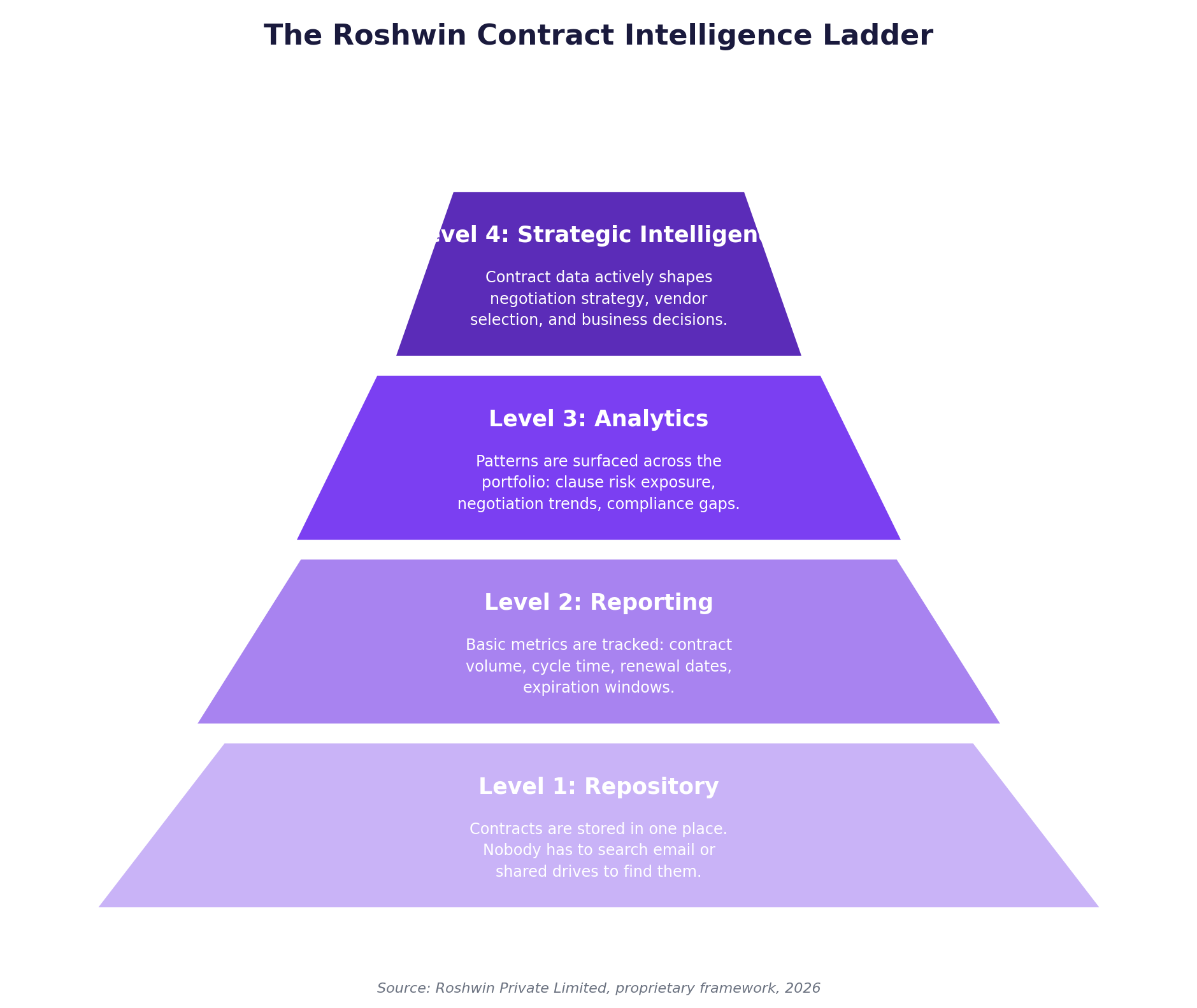
Level 1: Repository. Contracts live in one searchable system. Nobody has to dig through email threads or shared drives to find an executed agreement. This is table stakes, not a strategic capability, but a large share of organizations have not reliably achieved even this.
Level 2: Reporting. Basic metrics are tracked and visible: contract volume by type, cycle time, upcoming renewals, and expiration windows. This is where most CLM implementations plateau, because reporting is what the platform shows out of the box.
Level 3: Analytics. Patterns are surfaced across the full portfolio: which clauses create the most negotiation friction, where compliance exposure clusters, which counterparties consistently push for the same concessions. This requires deliberate configuration, not just a platform license.
Level 4: Strategic Intelligence. Contract data actively shapes decisions before they are made: negotiation strategy is set using historical concession data, vendor selection accounts for past contract performance, and legal spend decisions are backed by portfolio-wide evidence rather than instinct.
Each level is a genuine prerequisite for the one above it. An organization cannot do meaningful analytics on a repository it cannot search completely, and it cannot build strategic intelligence on analytics nobody trusts. The honest first step for most legal departments is admitting which level they are actually on, rather than the level their CLM vendor's sales deck implied they would reach.
What This Means for Legal and Commercial Leaders
- Audit repository completeness before investing in any analytics layer. A dashboard built on 80 percent of your contracts will quietly mislead every decision built on top of it.
- Treat Level 2 reporting as a floor, not a destination. Most CLM platforms deliver this out of the box, and stopping here leaves the real value of the platform unrealized.
- Assign explicit ownership for turning contract analytics into negotiation and sourcing decisions. Data that nobody is accountable for acting on stays data, and never becomes intelligence.
- Revisit clause and risk analytics quarterly, not annually. Negotiation patterns and compliance exposure shift faster than most reporting cadences currently assume.
Conclusion
The legal departments extracting real strategic value from their contracts are not the ones with the most advanced analytics software. They are the ones that did the unglamorous work of getting every contract into one searchable place first, then climbed the ladder deliberately, one level at a time, until the repository stopped being a filing cabinet and started being a source of leverage. Roshwin's contract intelligence practice is built around that climb: helping legal departments turn a static archive into a genuine strategic asset.
Put this into practice
Related ROSHWIN services
Legal operations, managed legal services and AI-enabled transformation, led by attorneys
ROSHWIN Private Limited works as an extension of corporate legal departments and law firms. Our attorney-led teams combine subject knowledge with responsible use of AI, so the work is fast, consistent and defensible, with pricing agreed up front.
Serving clients across the globe, including the United States, Canada, the United Kingdom and Europe, and the Middle East.
Continue reading
All insights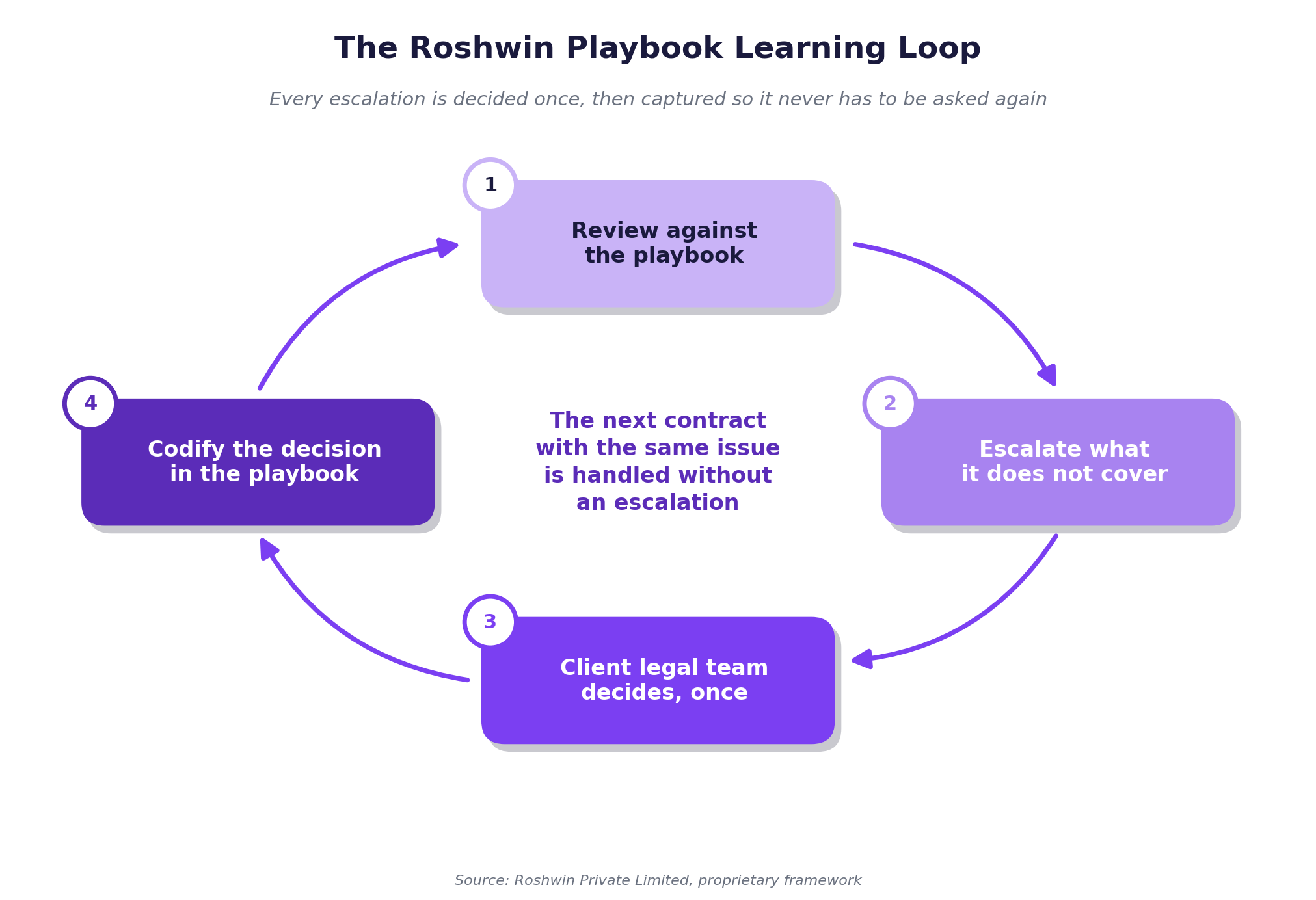
Playbooks That Learn: Contract Review With Falling Escalation Rates
How a contract review playbook turns every escalation into a decision made once, and why the best programs track how often they have to ask.
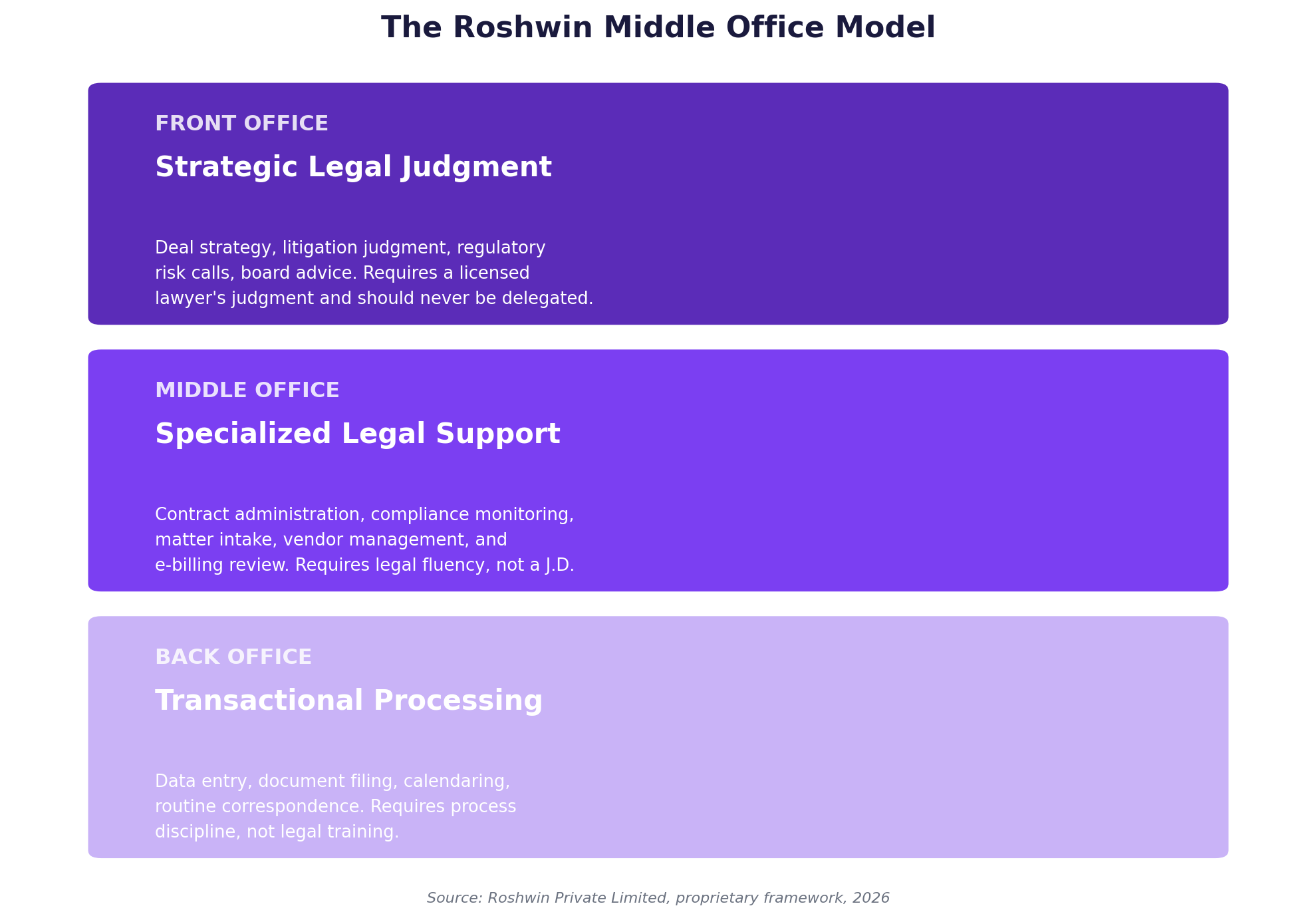
The Middle Office: Unlocking Hidden Capacity in Legal Teams
How strategic middle-office support allows legal professionals to focus on high-value work while maintaining operational excellence in the background.